

Threaded Lifting System for Precast Concrete: Anchors, Inserts and Lifting Devices
A reliable lifting system is essential for the safe handling, transportation, and installation of precast concrete elements. Threaded lifting systems provide a practical solution by combining cast-in lifting anchors with compatible threaded lifting devices. Designed for repeated use, these systems offer flexibility for different precast concrete components and lifting requirements.
EATHU offers a range of threaded lifting anchors, inserts, and lifting devices for precast concrete applications. From standard threaded anchors to specialized lifting loops, our product range supports different installation configurations and handling requirements.
What Is a Threaded Lifting System?
A threaded lifting system is a mechanical lifting solution used to handle precast concrete elements during demolding, transportation, and installation. It generally consists of two main components: a threaded lifting anchor embedded in the concrete and a compatible lifting device connected to the anchor during handling.
The threaded anchor is positioned in the precast element during production. Once the concrete has hardened, the corresponding lifting device can be screwed into the anchor to establish a connection for lifting.
Unlike systems that rely on spherical-head connections, threaded lifting systems use a threaded interface. This provides a straightforward connection method and allows different anchor configurations to be used according to the design and structural requirements of the concrete element.
Threaded lifting systems are commonly used for precast concrete panels, walls, beams, columns, and other concrete components.
Types of Threaded Lifting Anchors and Inserts
Different precast concrete elements require different anchor configurations. Factors such as installation position, available space, concrete geometry, and lifting direction influence the selection of suitable concrete lifting inserts.
EATHU's threaded lifting system includes several anchor and insert designs.
BSR Threaded Lifting Anchor
The BSR is a threaded lifting anchor with a flat base and an integrated connection body. Its design provides an embedded anchoring configuration for precast concrete applications.

HSR Threaded Lifting Anchor
The HSR features a threaded connection and an angled base configuration. It is another option within the threaded lifting anchor range, offering a different installation geometry from the BSR model.

HSB Threaded Lifting Insert
The HSB features a cylindrical body with an internal threaded connection and a lateral opening. Its compact structure provides an alternative configuration for threaded lifting insert applications.
BSA Threaded Lifting Anchor
The BSA features an L-shaped base with an integrated threaded connection. Its bent configuration distinguishes it from flat-base and cylindrical anchor designs.
 SA Anchor
The SA Anchor consists of a vertical threaded connection with a circular base. It is designed as an embedded anchor component for precast concrete lifting applications.

Plate Anchor
The Plate Anchor combines a threaded connection with a square base plate. Its plate configuration provides another installation option for precast concrete elements.
These different precast concrete lifting anchors allow manufacturers to select suitable insert configurations according to their concrete element designs and project requirements.
Threaded Lifting Devices and Accessories
In addition to cast-in lifting anchors, a complete threaded lifting system requires compatible lifting devices to connect the embedded anchors to lifting equipment.
EATHU's product range includes several lifting device configurations.
TGK/TGL Lifting Devices
The TGK/TGL models feature a wire-rope configuration with a threaded connection. This design provides a flexible lifting arrangement for compatible threaded anchors.

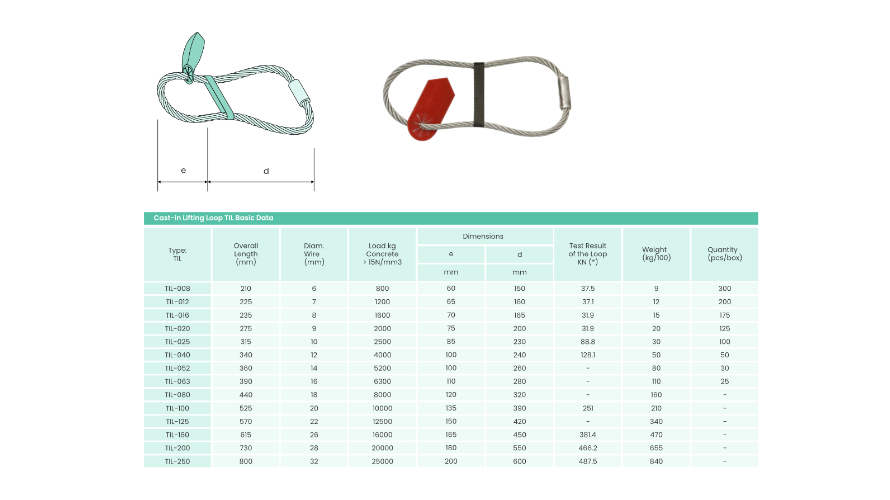
TIL Threaded Lifting Loop
The TIL is another threaded lifting loop design. Together with the THS and TGK/TGL models, it expands the available lifting device configurations within the threaded system.
The appropriate lifting device should always be selected according to the anchor type, thread compatibility, rated capacity, and applicable lifting requirements.
Applications of Threaded Lifting Systems in Precast Concrete
Threaded lifting anchors and devices are used in various precast concrete production and construction applications. Their configuration can be selected according to the dimensions, weight, and structural design of the concrete component.

Common applications include:
Precast Concrete Wall Panels
Threaded lifting inserts can be incorporated into wall panels during production to provide designated connection points for handling and installation.
Precast Concrete Beams and Columns
Suitable lifting anchors can be positioned in beams and columns to support their handling during demolding, transportation, and erection.
Precast Concrete Slabs
Threaded lifting systems can be used in slab production where appropriate anchor positions and lifting arrangements are specified.
Other Precast Concrete Components
They can also be considered for stairs, architectural concrete elements, and other precast components requiring embedded lifting connections.
How to Select the Right Concrete Lifting Anchors
Choosing suitable lifting anchors for concrete requires more than simply matching the thread size. The anchor configuration and lifting arrangement must meet the requirements of the specific precast element.
Several factors should be considered:
1. Concrete Element Design
Consider the dimensions, thickness, weight, and geometry of the precast component. The available installation space and anchor position will influence the choice of lifting insert.
2. Anchor Configuration
Different anchor designs provide different embedded geometries. Flat-base, angled-base, cylindrical, and plate-type configurations should be evaluated according to the element design and engineering requirements.
3. Thread Compatibility
The threaded lifting device must match the corresponding anchor in thread type and size. Incompatible connections can compromise the lifting arrangement.
4. Load Requirements
Determine the required lifting capacity based on the component weight, lifting points, load distribution, lifting angle, and applicable dynamic factors. Always follow the manufacturer's rated capacities and technical instructions.
5. Installation and Handling Conditions
Consider how the concrete element will be demolded, transported, stored, and installed. These conditions affect the required lifting arrangement and selection of compatible devices.
Installation and Safety Considerations
Proper installation is essential for the performance of precast concrete lifting anchors. The anchor position, concrete cover, reinforcement arrangement, and embedment details should follow the approved engineering design and manufacturer's instructions.
Before lifting, verify that the threaded lifting device is fully and correctly engaged with the anchor. Inspect the connection and lifting accessories for visible damage, deformation, corrosion, or excessive wear.
The concrete must also have achieved the specified strength before lifting. Rated working loads, permitted lifting directions, and any required edge-distance or reinforcement conditions must be observed.
Lifting operations should be carried out by qualified personnel using approved equipment and procedures. Never exceed the rated capacity of the lifting system.
EATHU Threaded Lifting System for Precast Concrete
EATHU supplies a range of precast concrete lifting components, including threaded lifting anchors, inserts, and lifting devices. Our product selection covers multiple configurations, including BSR, HSR, HSB, BSA, SA Anchor, Plate Anchor, TGK/TGL, THS, and TIL.
We support OEM supply for customers seeking precast concrete lifting components based on their product specifications and project requirements.
Whether you need threaded lifting inserts, concrete lifting anchors, or compatible lifting devices, EATHU can help you identify suitable products for your precast concrete applications.